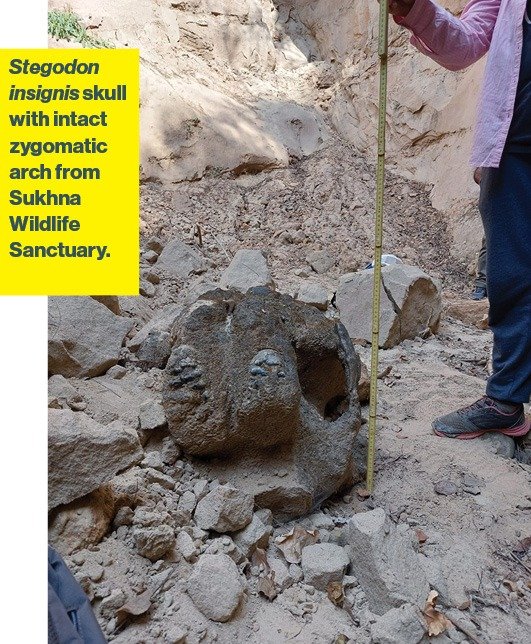
When fossils are discovered buried deep in prehistoric sediments, one of the first questions scientists ask is simple yet fundamental: how old are they? For materials
Older than 50 thousand years, traditional techniques such as radio-carbon dating do not work. Similarly other important technique, luminescence dating has proven range of up to 500 thousand (0.5 million) year.
This is where Electron Spin Resonance (ESR) dating steps in, providing another way to read the hidden “clock” inside fossilized remains such as teeth and shells as well as natural minerals present in sediments.
What Is ESR Dating?
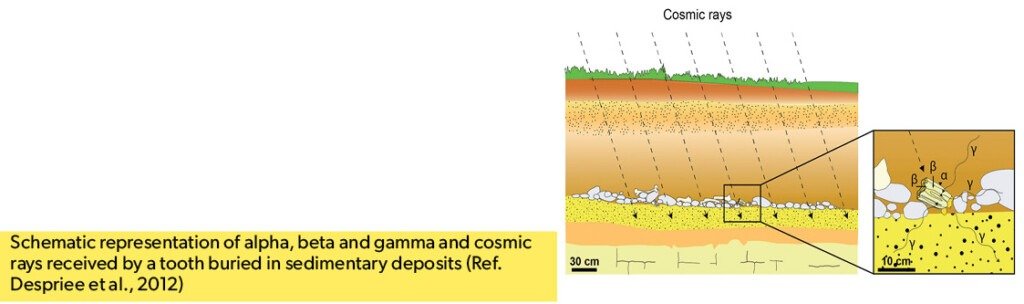
ESR dating is a trapped charge dating technique, first developed in the late 1960s, that relies on the interaction between natural background radiation and materials present in sediments. It measures the number of unpaired electrons present in crystal sites. Some of these materials used could be bones, tooth enamel, corals and natural minerals such as quartz, feldspar, Gypsum etc. Natural background radiation comprises, alpha (α), beta (β) and gamma (γ ) radiation resulting from decay of natural radioactive elements such as U, Th, K along with cosmic radiation (CR) from space. This radiation knocks electrons out of place i.e. atoms present in the crystals. Some of these electrons get trapped at defects in the crystal lattice, and they remain there-almost perfectly preserved-for millions of years. This can be understood considering a golf player (α, β, γ & CR) trying to hit golf ball (electron) into a pit (crystal defect). Over time, the number of golf balls (trapped electrons) builds up in the pit. By measuring total number of golf balls in pit and rate of filling, we can estimate the time of filling. Similarly using total number of electrons and rate of filling of electrons by estimating concentration of U, Th, K; scientists can calculate the time sample is receiving radiation, which is age of sample.
Why Teeth Are Ideal for ESR Dating
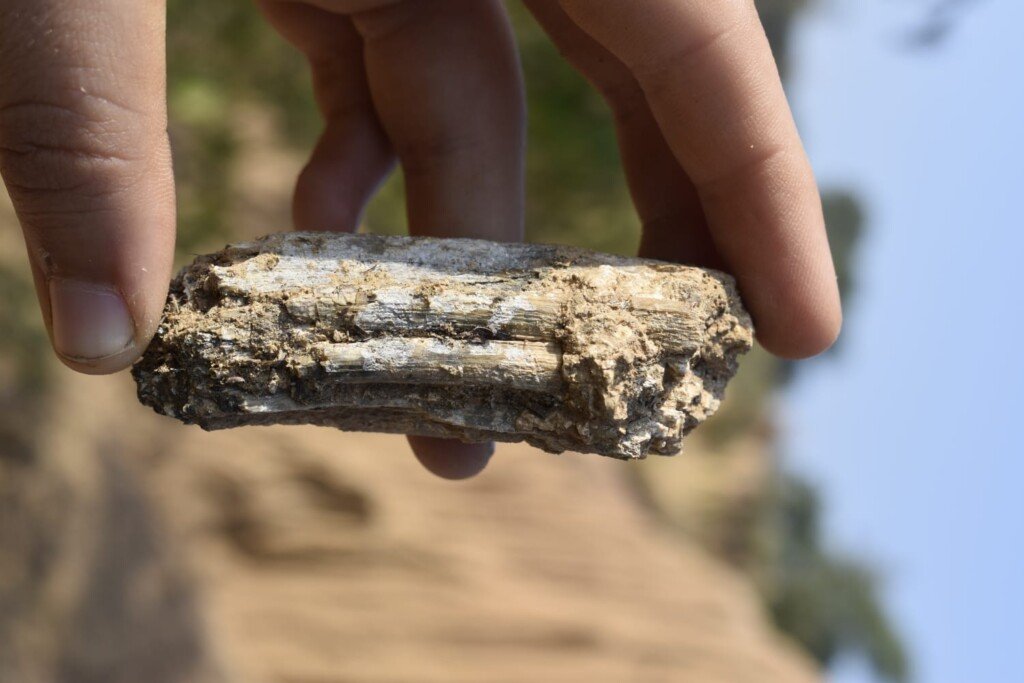
Among all materials used for ESR dating for archaeology, tooth enamel is one of the most reliable. Enamel is incredibly hard and resistant to chemical change, so it is preserved far better than softer materials like bone. The mineral hydroxyapatite that forms enamel contains carbonate ions which are especially sensitive to radiation damage. In addition to this, sediment associated with tooth enamel contains natural minerals as quartz and feldspar which are hard can be used for dating. But direct dating of archaeological material such as tooth or bone is always better.
When a fossil tooth is found, tiny samples of its enamel are powdered and its natural ESR signal is measured. After this sample is exposed to a known amount of radiation (dose) in the laboratory through radioactive sources and its ESR signal is again measured in sophisticated instrument known as ESR spectrometer. The intensity of ESR signal is proportional to number of trapped electrons. The signal intensity increases with the amount of radiation. By comparing the signal intensity of natural and laboratory irradiated samples researchers can determine the amount of radiation the sample has received in nature or in other words it tells how many electrons are trapped in defect sties. They then measure concentration of natural U, Th, K and CR contribution and calculate the rate at which radiation is deposited in nature i.e. number of electrons trapped annually. So, knowing total electron and electrons trapped annually the age of sample is estimated.
Applications in the Field
ESR dating is particularly valuable for fossils that fall into the 0.5–5 million-year range, a part of time period that is often beyond the reach of most other dating methods.
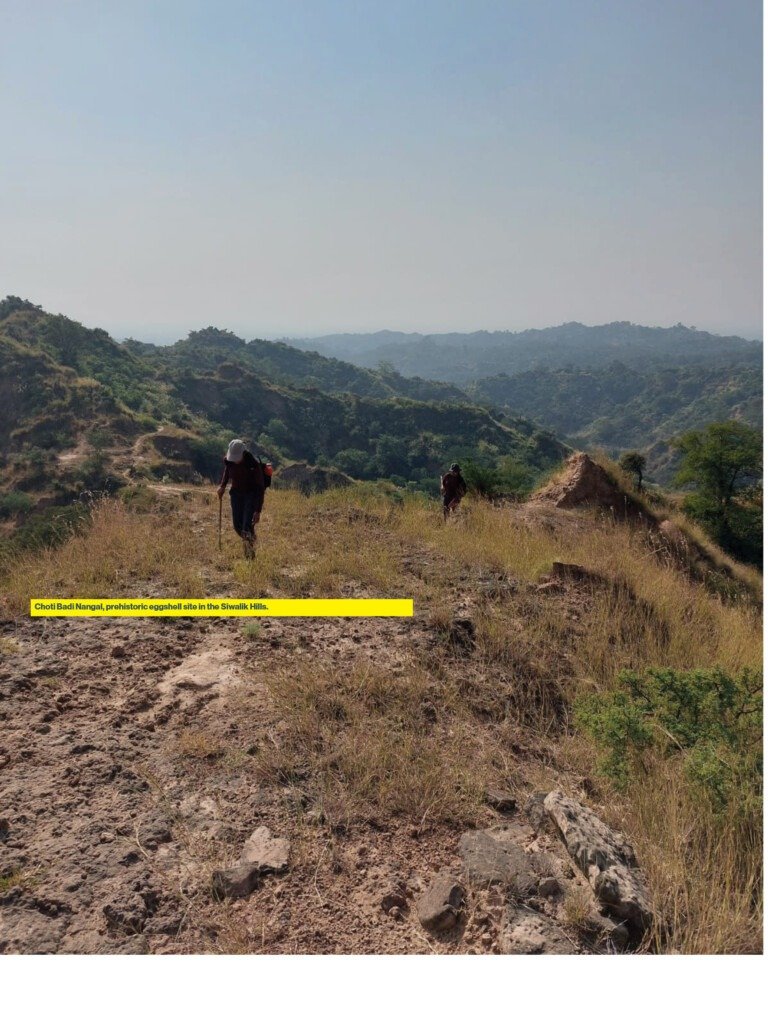
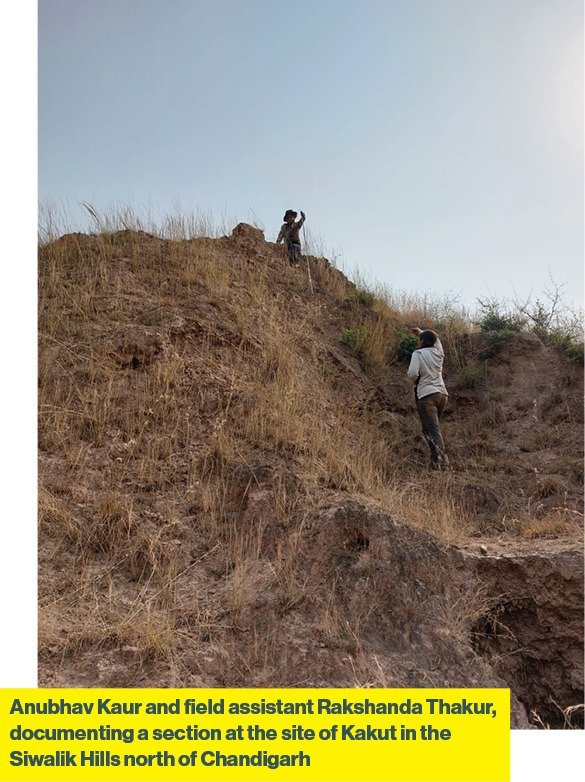
It has been applied to cave sites in Africa and Europe, early human fossils in Asia, and, more recently, to the Pinjor Formation in the Siwalik Hills of northern India.
Why ESR Matters
ESR dating bridges a crucial gap in our ability to estimate very old ages. It allows scientists to place fossils and their evolutionary stories into a measurable timeframe that extends far beyond the limits of other methods. As techniques improve, ESR continues to reveal more accurate and detailed pictures of how life and climate evolved over millions of years.